The Waking Estuary at 5:00 AM
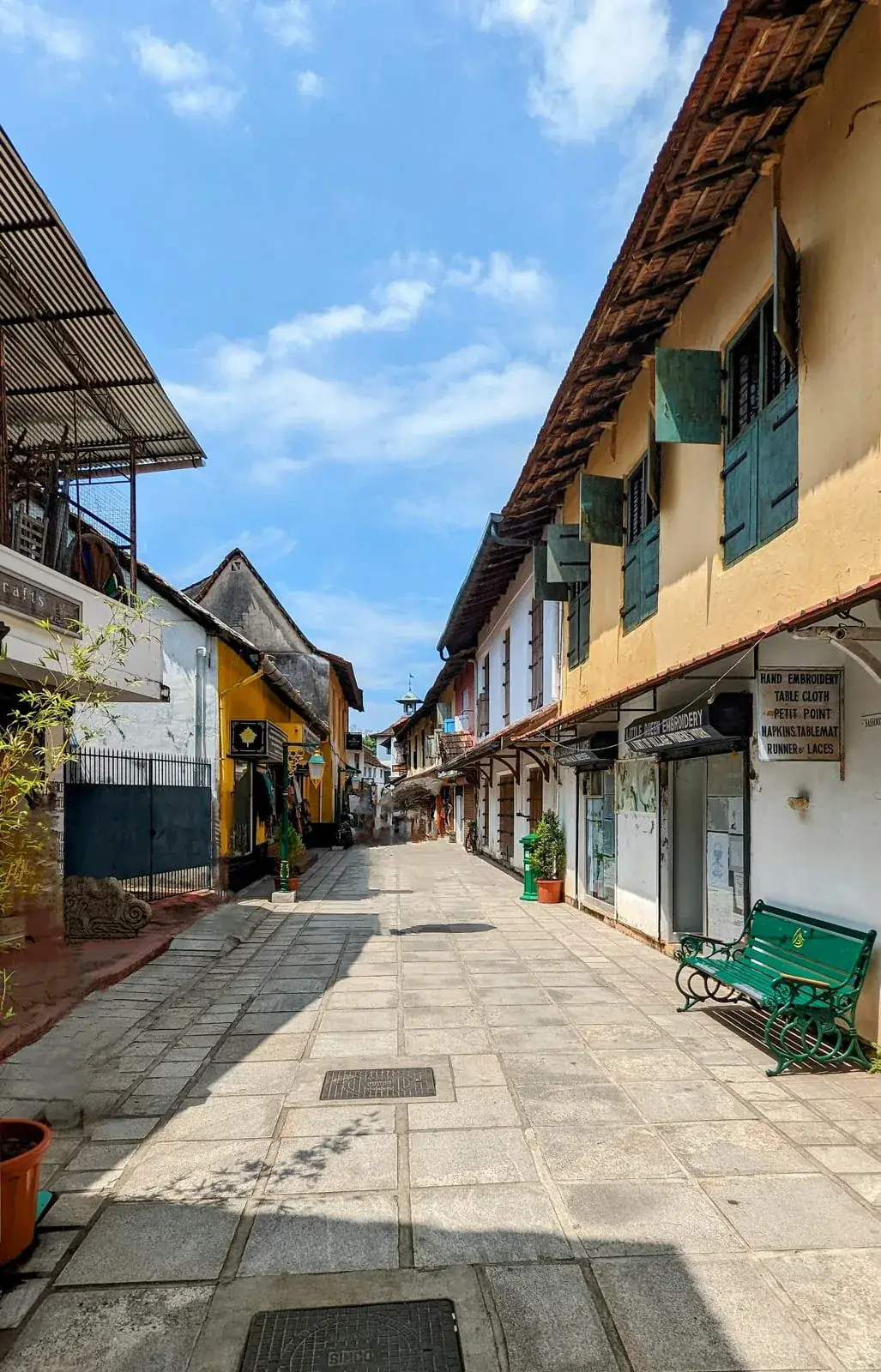
If you only experience Fort Kochi at midday — navigating crowded souvenir arcades around the Chinese fishing nets — you miss the entire poetry of this coastal sanctuary. The real magic happens in the blue hour just before dawn, when river mist still hangs thick across the Vembanad estuary and the first church bells of Santa Cruz Basilica echo through damp cobblestone corridors.
Long before motorized autorickshaws begin their noisy daily rounds, the only sound on Princess Street is the occasional whir of an old bicycle chain and the soft slap of harbor waves against the granite promenade. Giant rain trees, draped in thick emerald moss and centuries of Atlantic maritime history, cast quiet silhouettes over pastel-yellow Dutch and Portuguese villas.
The Sacred Geometry of the Brass Davara
Follow the intoxicating aroma of freshly ground peaberry beans and roasted chicory down KB Jacob Road. Step into an unassuming corner tea shack where the kappi master stands before a bubbling cauldron of full-cream milk. There is no touchscreen menu here, no disposable paper cups, and no rush.
He brews a dark, viscous decoction through a traditional cloth filter, then performs the legendary South Indian pour: lifting the brass tumbler a full meter above the wide-lipped davara. The steaming stream arcs through the cool morning air, cooling just enough to drink while generating a dense, golden velvet froth on top.
You do not drink this coffee on the run. You hold the warm, heavy brass cup with both hands, leaning against an ancient lime-washed wall, watching the street slowly awaken. In an era obsessed with speed and productivity, this single tumbler is an exercise in deliberate patience.
Fort Kochi isn't a destination you check off a hurried bucket list; it is a gentle invitation to adjust your inner clock to the unhurried rhythm of the tides.
Footsteps Through the Spice Centuries
Finish your coffee and wander past Calvathy canal into Mattancherry and Jew Town. Long before the boutique curio shops open their wooden shutters, the narrow lanes smell intensely of dried Tellicherry black pepper, bruised green cardamom pods, split nutmeg, and Ceylon cinnamon piled high inside century-old wholesale godowns.
Handcarts laden with burlap sacks rumble past white-washed synagogue courtyards. This single coastal spit has traded with Arab dhows, Chinese imperial junks, Roman galleys, and Dutch fleets for thousands of years. Yet in the quiet early morning, that staggering weight of history feels personal, intimate, and calm.
The Cantilevered Teak Giants of the Promenade
By 6:15 AM, the eastern sky over Ernakulam turns from smoky lavender to pale gold. Walk toward the waterfront promenade where the iconic 14th-century Chinese fishing nets (Cheena Vala) stand like colossal wooden spiderwebs suspended between land and water.
Watch the four-man fishing crews work in complete, wordless coordination. Stepping onto massive teak balance beams, they use suspended granite counterweight boulders to pivot the delicate cantilevered frames downward into the tidal currents, waiting for silver shoals of pearl spot and mullet to sweep in with the morning tide.
There is no shouting or mechanized winches. The entire ritual is governed by physical balance, muscle memory, and the pull of the moon — an unbroken tradition preserved along this coast for over seven hundred years.
Slowness as the Ultimate Travel Luxury
Most modern itineraries pack three cities into two days, rushing travelers from monument gates to hotel lobbies with the anxiety of a ticking schedule. But true travel in South India begins when you abandon the rush.
When you travel with a dedicated private chauffeur who knows the rhythm of the roads, you never worry about parking, train timetables, or lost turns. You can afford to linger an extra hour listening to the harbor bells, sip a second tumbler of filter coffee, and watch the morning sun burn the mist off the water.
That is what Fort Kochi teaches anyone willing to wake up early: that the greatest moments of your holiday are rarely the famous monuments you photograph — they are the quiet, unscripted hours in between.
Ask your chauffeur to drop you by Vasco da Gama Square at 5:15 AM and meet you 90 minutes later near the Dutch Cemetery. Walk the paved coastal loop without rushing. The finest roasted peaberry decoction is served at the quiet brass-counter stall opposite the Portuguese heritage museum.
Published by Veron's Route Team
Written from 40+ years of navigating South India's coastal highways, tea mist passes, and sacred temple corridors.